🗺 ATEX · EN/IEC 60079-10 · Zone Classification

Hazardous Area Classification
Done Right, the First Time

Accurate zone classification is the foundation of every ATEX compliance programme. Get it wrong and every equipment selection, inspection, and EPD built on top of it is compromised. Independent, field-verified zoning — for gas, vapour and dust.

EN/IEC 60079-10-1 (Gas & Vapour) EN/IEC 60079-10-2 (Dust) ATEX Directive 2014/34/EU Workplace Directive 1999/92/EC
Request a Free Assessment →
6Hazardous zone categories
(gas + dust combined)
2Core standards:
EN 60079-10-1 & -10-2
EUOn-site & remote service
across Europe
100%EPD-ready zoning drawings
on every project

Zone Classification Is Not a Document Exercise — It's an Engineering Decision

Hazardous area classification determines which zones exist, how large they are, and what category of Ex equipment is required. Every downstream decision depends on getting this right.

  • Workplace Directive 1999/92/EC requires all explosive atmosphere areas to be classified into zones
  • Zone classification must be based on release sources, ventilation, and substance properties — not assumptions
  • Incorrect zoning leads to under-specified or over-specified equipment — both are non-compliant or wasteful
  • Zone drawings must be kept up to date as the facility changes — they are living documents
  • Zone classification forms the mandatory basis for the Explosion Protection Document (EPD)
  • An independent classification by a competent engineer provides defensible, auditable results
📐 What Drives the Zone Boundary?

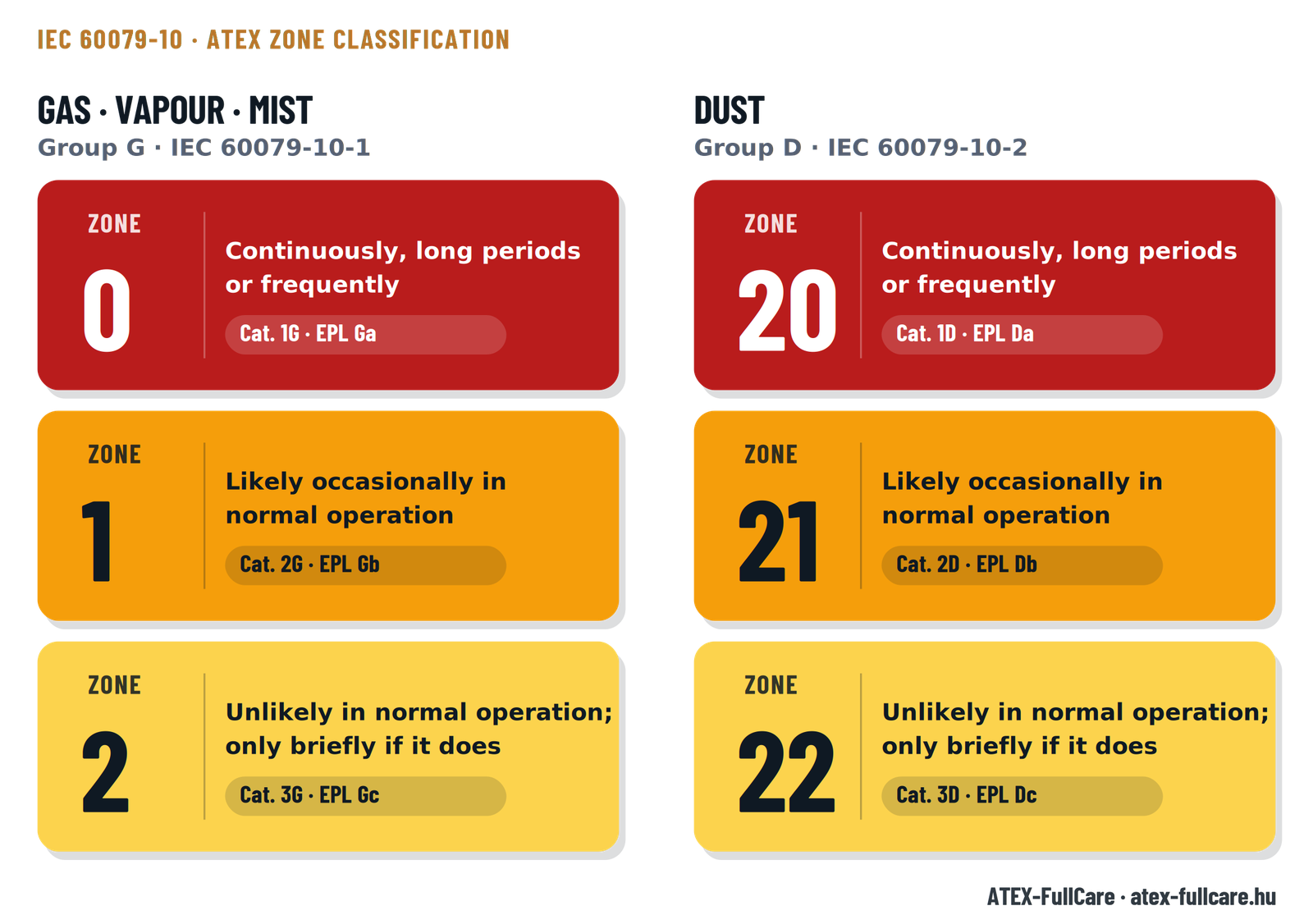
Release source grade — Continuous, primary, or secondary release determines the zone category (0/1/2 for gas, 20/21/22 for dust).

Ventilation — Natural or forced ventilation directly shrinks or expands zone extents. Good ventilation can reduce Zone 1 to Zone 2 or eliminate a zone entirely.

Substance properties — Flash point, LEL, vapour density, and dust particle size all affect both the zone type and the required equipment temperature class and gas group.

Topography — Heavier-than-air vapours collect in pits and drains. Lighter-than-air gases accumulate in roof voids. The physical environment is part of the calculation.


Understanding the Six Hazardous Zones

Gas/vapour and combustible dust are classified under separate zone numbering systems — both governed by EN/IEC 60079-10.

Gas & Vapour Zones (EN/IEC 60079-10-1)

Zone 0
Continuously present
Explosive gas atmosphere present continuously, for long periods, or frequently. Requires Category 1G equipment (Ex ia, Ex ma). Typically inside tanks, vessels, pipework.
Zone 1
Likely during normal operation
Explosive atmosphere likely to occur in normal operation. Requires Category 1G or 2G equipment. Typical around process equipment, flanges, pumps, vents.
Zone 2
Unlikely, short duration only
Explosive atmosphere not likely in normal operation; if it occurs, only rarely and briefly. Requires Category 1G, 2G or 3G equipment. General area around Zone 1.

Combustible Dust Zones (EN/IEC 60079-10-2)

Zone 20
Continuously present
Explosive dust cloud present continuously or for long periods. Requires Category 1D equipment (Ex ia, Ex ma). Typically inside dust-handling equipment, silos, filters.
Zone 21
Likely during normal operation
Explosive dust cloud likely during normal operation. Requires Category 1D or 2D. Filling/emptying stations, loading areas, conveyors with frequent dust emission.
Zone 22
Unlikely, short duration only
Explosive dust cloud unlikely in normal operation. Category 1D, 2D or 3D equipment. Areas where dust layers may form or clouds may occur due to equipment failure.

Classification Deliverables — What Each Document Does

A zone classification project produces a structured set of documents. Each one has a specific function in your compliance programme.

Deliverable Content Used For
Release Source Register All identified release sources, grade (continuous/primary/secondary), substance handled, release rate assumptions Classification justification; audit baseline
Zone Drawings Plan and elevation views with zone extents, zone type, equipment categories required, drawing revision history EPD, equipment procurement, contractor briefing
Ventilation Assessment Ventilation degree (high/medium/low), availability, effect on zone extents, recommendations for improvement Zone extent justification; HVAC design review
Substance Data Summary Flash point, LEL/UEL, vapour density, gas group (IIA/IIB/IIC), temperature class (T1–T6) for each substance Equipment selection; Ex marking verification
Classification Report Narrative justification for each zone decision, referencing EN 60079-10 methodology, signed and dated EPD integration; regulatory authority; insurer
Equipment Category Matrix Required equipment category per zone and substance combination — gas group and temperature class specified Equipment procurement; Ex inspection input

The Most Common Zone Classification Failures

Classification never done — or done once and forgotten Many facilities operate with no formal classification at all, or with a drawing from the original build that has never been reviewed against actual plant changes.
Zone extents based on guesswork, not methodology Round numbers ("3 metre radius around every pump") without reference to release source grade or ventilation — not compliant with EN 60079-10.
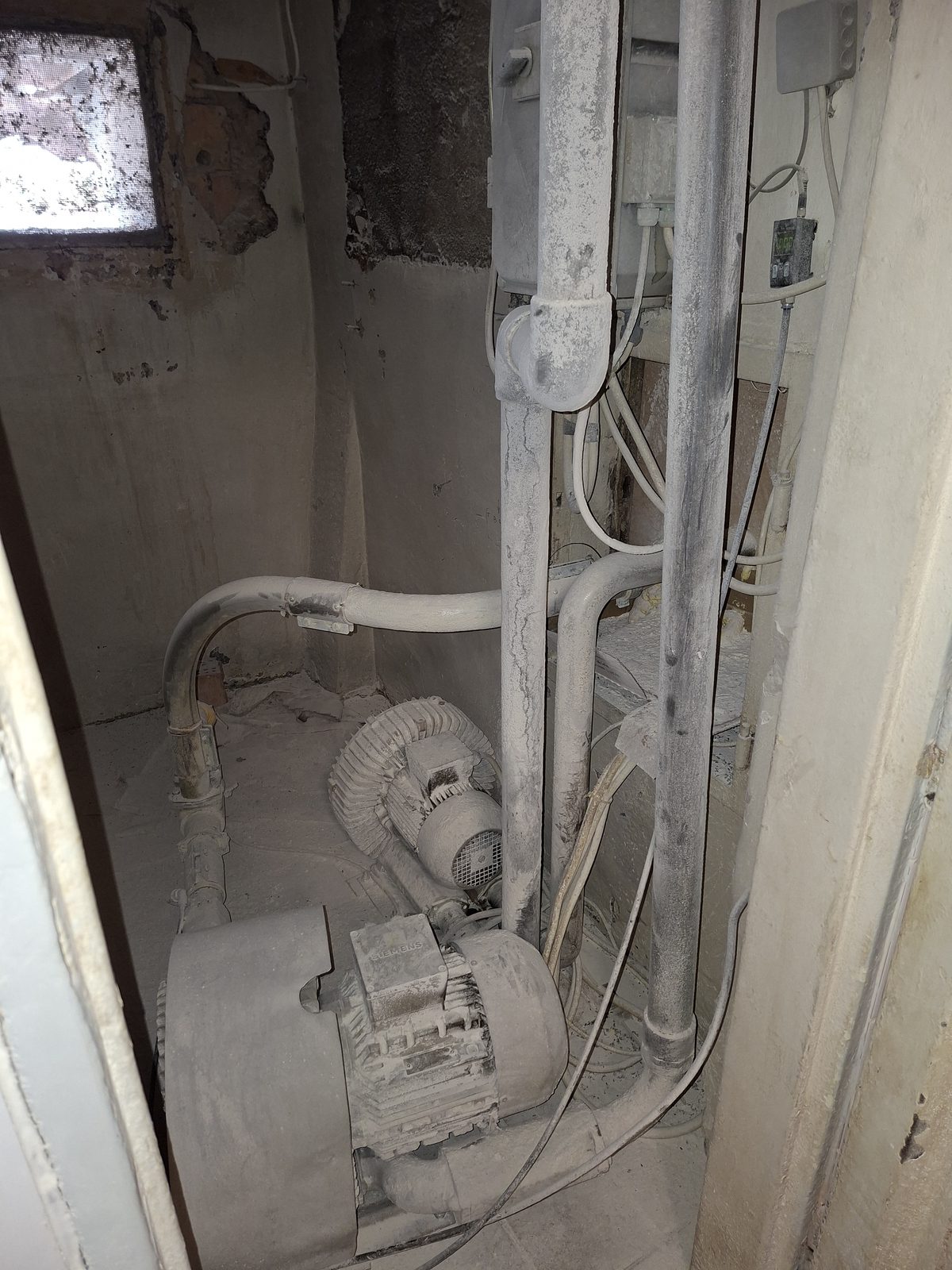
Dust zones ignored entirely Facilities with combustible dust (food, wood, chemical) often classify only gas zones. Zone 20/21/22 obligations are frequently overlooked or unknown.
Ventilation not factored in Natural ventilation treated as "adequate" without assessment — or forced ventilation relied upon without verified availability rating per EN 60079-10.
Wrong gas group or temperature class specified IIB equipment installed in an IIC environment. T3 rating where T4 is required. These errors are invisible until an incident occurs.
Zone drawings not updated after modifications New pipework, tanks, or process changes added without reviewing whether zone extents or zone categories need revision. A common EPD failure point.

What a Classification Project Looks Like

From initial site review through to completed, EPD-ready documentation — a structured process that fits around your facility's schedule.

🔍
Site Survey & Release Source Identification

On-site walk-through to identify all potential release sources: valves, flanges, pumps, vents, filling points, drainage. Existing P&IDs and layout drawings reviewed in advance.

⚗️
Substance Data & Gas Group Assignment

All substances handled assessed for flash point, LEL, vapour density, auto-ignition temperature. Gas group (IIA/IIB/IIC) and temperature class (T1–T6) determined per EN 60079-10.

💨
Ventilation Assessment

Ventilation type, degree and availability assessed per EN 60079-10 methodology. Impact on zone extents calculated — and recommendations made where ventilation is insufficient.

🗺️
Zone Drawing Production

Plan and elevation drawings produced showing all zone extents, zone types, and required equipment categories. Delivered in PDF and editable format for integration into your technical file.

📋
Classification Report

Written narrative justifying every zone decision with reference to EN 60079-10 methodology. Signed and dated — ready for the EPD, auditors, and insurance assessors.

🔄
Review & Update Service

Existing classification reviewed against current plant layout and process. Gaps identified, drawings updated. Available as a one-off review or ongoing service for facilities under active modification.

Not Sure Which Zones Apply to Your Facility?

Start with a free 30-minute online assessment. Describe your process and substances — and I'll tell you what classification scope you need and what it will cost.

↓ Fill in the form below — response within 1 business day

Name
Privacy Policy
Scroll to Top