
Explosion Protection Document (EPD) Preparation
Preparation and updating of the explosion protection document for industrial and oil & gas sites — built on real classification and field condition, not a template. Compliant, practical and audit-ready.
What is an explosion protection document?
The explosion protection document (EPD — the ATEX equivalent of a DSEAR document in the UK) records how explosion risks at a site are assessed and controlled. It brings together the hazardous area classification, the equipment and protective measures, the organisational controls and the residual risk into one defensible file.
What an EPD typically covers
Areas & zones
Classified zones for gas and dust, with drawings and a schedule of the sources of release.
Equipment & measures
Ex equipment categories, ignition-source control, ventilation, earthing/bonding and detection.
Organisation & residual risk
Permit-to-work, maintenance and inspection regime, training, and the assessed residual risk.
More than a compliance file
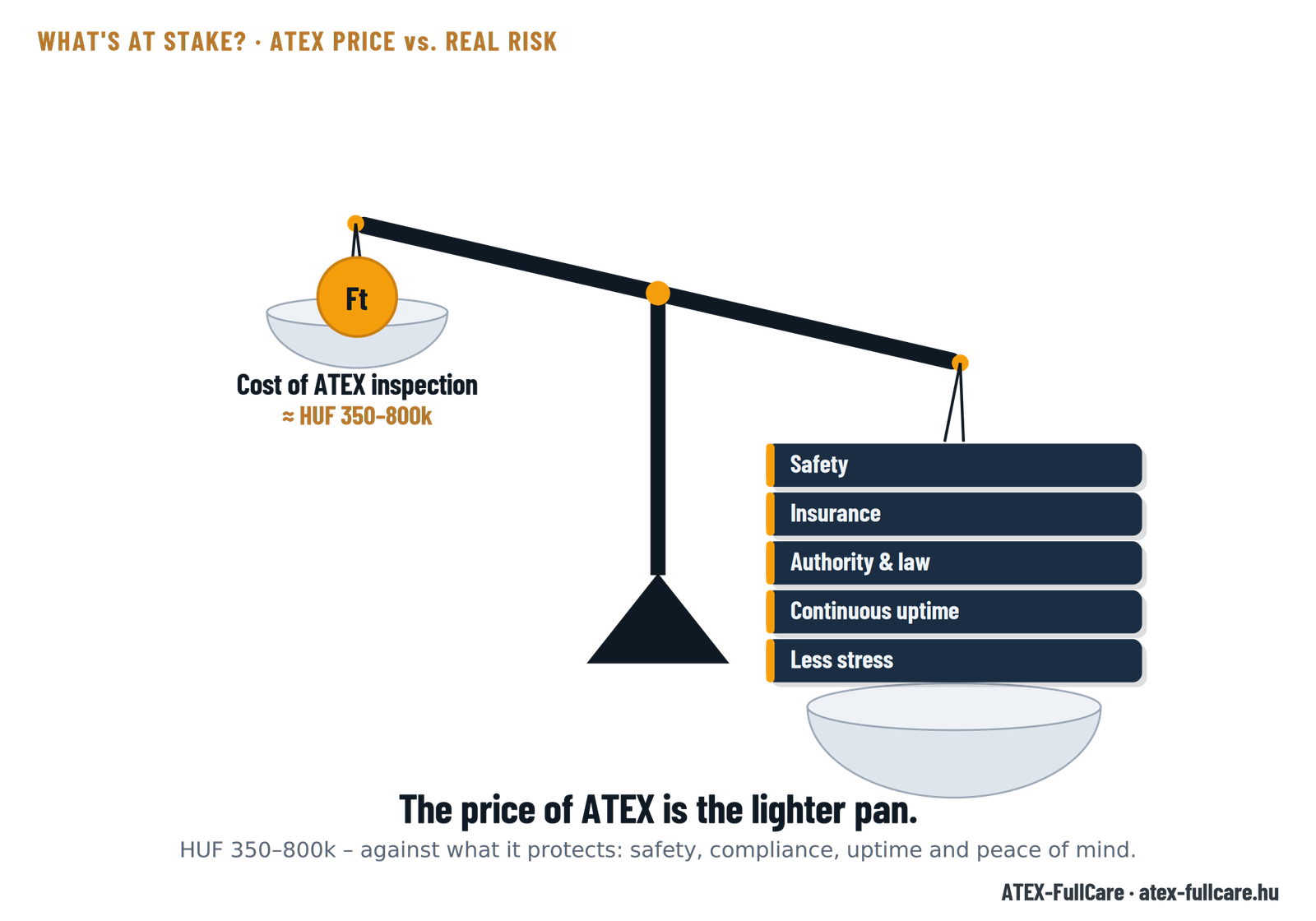
A neglected or copy-paste EPD is a real financial risk: it surfaces during audits, insurer reviews and incidents. A practical, current EPD protects safety, uptime and compliance — and makes the cost of getting it right small against what it protects.
How I prepare or update an EPD
Review & classify
Check existing documents and confirm the classification against the current process.
Field check
Compare the document with the installed reality — equipment, markings and controls.
Assess & document
Assess ignition sources and measures, and record the EPD so it is usable and defensible.
Keep it live
Set how and when it is reviewed, so it stays current after changes.
Request an EPD quote
Tell me whether an EPD exists, how current the classification is, and what has changed on site. I will advise whether an update or a new document is needed, and provide a quote.
Independent CompEx certified inspection and explosion protection support. Final scope and fee are agreed individually. Email: info@atexfullcare.com.
Frequently asked questions
Do I always need a brand-new EPD?
Often not. Where the classification is still valid, an update plus a field check is enough. A full new document is prepared only when the plant or classification has changed substantially.
Is the EPD the same as hazardous area classification?
No — classification defines the zones; the EPD is the wider assessment that uses them. See hazardous area classification.
Will it stand up to an audit or insurer review?
That is the point: the EPD is built on real classification and field condition, so it is defensible rather than generic.
Is the EPD the same as a DSEAR document?
Effectively yes — the explosion protection document is the ATEX equivalent of the UK DSEAR document. The assessment approach and contents are the same; only the legal label differs.
How long does an EPD take?
It depends on site size and how current the classification is. An update plus a field check is faster than a full new document; the scope and timing are agreed after a free needs assessment.